

Lake Norman: From Catawba River to Inland Sea
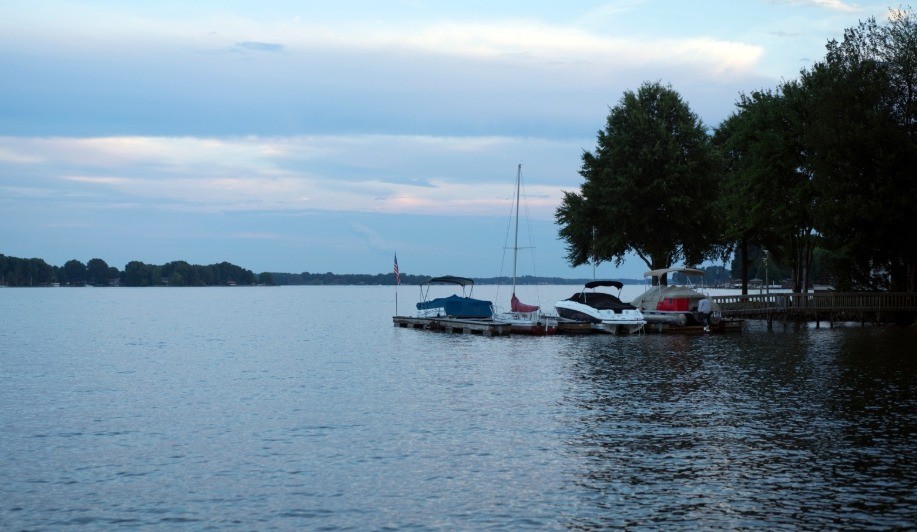
A research paper based on primary excerpts from Chuck McShane’s A History of Lake Norman: Fish Camps to Ferraris (as provided via images), combined with additional historical synthesis.
Introduction
The Catawba River has long shaped life in the North Carolina Piedmont. Long before an inland lake called Lake Norman appeared on maps, the river sustained Indigenous communities, drew in explorers and migrants, powered mills, and eventually became the backbone of one of the most ambitious hydroelectric networks in the American South. In the 1950s and 1960s—after decades of incremental industrial development and land acquisition—the river’s course at Cowan’s Ford was dammed, forming Lake Norman, the state’s largest man‑made reservoir. The lake’s 520 miles of shoreline now frame a region identified with recreation, suburban growth, and energy production, but the story reaches far deeper than a lovely body of water: it is the story of a river constantly repurposed by each generation that lived along it.
This paper synthesizes material from Chuck McShane’s book (as captured in the supplied chapter images) with contextual historical knowledge to present a coherent narrative: Indigenous heritage; colonial settlement and the Great Wagon Road; the Revolutionary War along the Catawba; the rise of cotton agriculture and mills; James B. “Buck” Duke’s industrial vision and the creation of Southern Power Company; the flood of 1916 and the maturation of hydroelectric development; and, finally, the construction of Cowan’s Ford Dam and the transformation of the region into the Lake Norman we know today. Where appropriate, the paper highlights social and ecological consequences as well as the economic and infrastructural gains that followed.
Indigenous Life and Early European Contact
Before there was a lake, there was the river—and before Europeans, there were the peoples who called it home. The Catawba, who referred to themselves as Kawahcatawba, “the people of the river,” settled in a network of villages along the fertile bottomlands of the Piedmont. Canoes threaded the watercourses; bark‑covered homes and fields of corn, squash, and beans lined the banks. Warfare with neighbors such as the Cherokee occurred, but the river bound Catawba communities together as both highway and pantry.
European contact in the 16th century upended that world. Explorers associated with the Spanish entradas—Hernando de Soto in the 1540s and Juan Pardo two decades later—moved through the interior, and a chain of small forts appeared near Native villages, including Joara (near present‑day Morganton). Trade and diplomacy mixed uneasily with coercion. The deadliest invader proved microscopic: epidemic disease swept Indigenous towns. By the early 1700s, waves of smallpox and other illnesses, combined with displacement and war, reduced the Catawba population drastically. By 1780, as Chapter 1 of McShane’s book notes, only a few hundred Catawba remained, even as their identity and traditions endured.
Colonial Settlement and the Great Wagon Road
In the mid‑18th century Scots‑Irish and German settlers, chafing under taxes and ecclesiastical authority in Pennsylvania and Maryland, streamed south along the Great Wagon Road. Drawn by reports of fertile land and relative autonomy, they planted homesteads on both sides of the Catawba. Adam Sherrill established one of the area’s earliest permanent European homes near a ford that would take his name—Sherrill’s Ford. These communities leaned Presbyterian and prided themselves on local self‑governance. Anecdotes preserved in the local record describe itinerant Anglican ministers receiving frosty receptions; some settlers wanted nothing to do with distant church bureaucracies and their fees.
Bridges and engineered roads were scarce. Travelers forded the river at shallow points or rode ferries such as Rozzelle’s. Markets and crossroads churches served as hubs of social and economic exchange. The river shaped settlement patterns as surely as it had shaped Indigenous life: it remained both the region’s constraint and its opportunity.
Revolutionary War Along the Catawba
The Catawba Valley did not stand apart from the American Revolution. British and Patriot forces maneuvered repeatedly across the river line, vying to control crossings. On February 1, 1781, militia General William Lee Davidson was killed at Cowan’s Ford when Redcoats attempted a crossing. The next day, British cavalry under Banastre Tarleton rode to Torrence’s Tavern near present‑day Mount Mourne, scattering local militia after a brief, fiery engagement and burning the tavern. Although many engagements were small by the standards of the northern theater, they imprinted the landscape with memory and loss. A cannon memorial near Cowan’s Ford today commemorates Davidson’s sacrifice. The Revolution’s aftermath left communities rebuilding and re‑knitting their institutions along the river.
Nineteenth‑Century Economy and Society
During the early 19th century, agriculture dominated. Cotton, enabled by the cotton gin, joined corn and wheat as the main cash crops. Wealth concentrated in families who owned both land and enslaved labor. Plantation houses such as Latta Place, Beaver Dam, and Mount Mourne testified to a local elite that historians have called the “patricians” of the northern Mecklenburg and southern Iredell country. Davidson College opened in 1837 as a Presbyterian alternative to the increasingly secular state university; bricks for early campus buildings were made by enslaved craftsmen.
Transportation changed the economic map. The Atlantic, Tennessee & Ohio Railroad reached the area in 1860, though it would be nearly two decades before rails connected Charlotte to Statesville. The Civil War spared most of the immediate vicinity from major battles, but conscription and supply demands strained households. In the war’s wake, blockaded ports, destroyed tracks, and ruin in many Southern cities produced scarcity and dislocation. Sharecropping emerged as a harsh compromise that preserved a racialized agricultural hierarchy while enabling some freedpeople and poor whites to work land they did not own.
Rise of the Mills
Textile mills rose along the Catawba’s banks as entrepreneurs recognized the river’s “fall line” power. In Lincoln and Iredell counties the Monbo and Long Island mills grew into industrial anchors. The Turner brothers expanded production in the 1880s and 1890s, and a mill village—East Monbo—took shape. Mill companies built worker housing and company stores; they often employed their own security and controlled much of daily life. The villages could be close‑knit and communal, but they could also be rough. A notorious incident in the 1890s—the killing of mill owner Jim Brown by a would‑be robber—exposed the tensions that simmered in boom‑and‑bust mill towns.
By the early 20th century, the region’s textile economy had matured. Electricity promised efficiency beyond water wheels and steam engines. That promise would reshape the river itself.
Buck Duke and the Southern Power Vision
James Buchanan “Buck” Duke, enriched by the American Tobacco Company and a pioneer of vertical integration and mass advertising, sought new opportunities at the dawn of the electric age. Alongside physician‑entrepreneur W. Gill Wylie and engineer William States Lee, Duke helped launch Southern Power Company in 1905 with a capitalization of roughly $7.5 million. Their vision was audacious: capture the energy of Piedmont rivers to electrify mills and towns across the Carolinas.
The first large hydro project rose at Great Falls, South Carolina. Six hundred workers labored day and night on a remote riverside job site, and by the spring of 1907 the station went online. Over the following years Southern Power knit a chain of dams and generating stations along the Catawba‑Wateree, laying the technological groundwork for the mid‑century reservoir that would bear the Duke company’s signature.
Roads, Bridges, and Early 20th‑Century Connectivity
Industrial power spurred civic ambition. In Mooresville and nearby towns, boosters paid for macadam roads to reach the river and lobbied for state highways. A steel bridge opened across the Catawba in 1908, linking Iredell and Catawba Counties and supplanting reliance on ferries at places like Rozzelle’s. Rural landscapes echoed with the sounds of looms, railroad whistles, and—by the early 20th century—automobiles edging along improved roads. The river remained a working waterway in its upper reaches, but it was increasingly harnessed to the rhythms of modern industry and mobility.
The Flood of 1916 and the Case for Storage
In the summer of 1916, the Catawba basin endured catastrophic flooding as the remnants of two tropical systems drenched the southern Appalachians and Piedmont within days of each other. Bridges washed out, mills and farms suffered severe damage, and new engineering conversations took shape about how to manage water more effectively in an era of industrial dependence on steady power. The flood did not alone cause the later creation of Lake Norman, but it forms part of the backdrop against which engineers and executives evaluated risk, storage, and generation across the river’s length.
Designing Cowan’s Ford Dam and Creating Lake Norman
After decades of building dams and acquiring land along the river, Duke Power moved to close the system with a final, large impoundment at Cowan’s Ford—the stretch of the Catawba where General Davidson had fallen generations earlier. Land assembly, planning, and permitting coalesced in the late 1950s. In 1959 a ceremonial blast marked the start of construction on what would become both the Cowans Ford Hydroelectric Station and Lake Norman. Crews cleared bottomlands, relocated roads and bridges, and in some cases moved cemeteries; other structures and foundations were left to the rising waters.
By 1962 the dam was substantially complete, and by 1963 the lake had reached operating pool. Engineers installed multiple Kaplan turbines to provide peaking power to a rapidly growing region. The reservoir sprawled across portions of Mecklenburg, Iredell, Lincoln, and Catawba counties, covering tens of thousands of acres and creating more than five hundred miles of sinuous shoreline. The lake took its name from Norman Atwater Cocke, a Duke executive who had guided key phases of the project.
Recreation, Real Estate, and Metropolitan Growth
The lake changed everything. Duke Power leased inexpensive cottage sites along the shoreline in the early 1960s, seeding a recreational culture that soon drew permanent residents. Real‑estate brochures from the decade marketed waterfront lots for under four thousand dollars—some advertised with live music and prize drawings to attract weekend buyers. Meanwhile, the state carved out a large park on the lake’s northeastern arm, today known as Lake Norman State Park, providing public access for camping, boating, hiking, and swimming.
Infrastructure evolved in tandem. Portions of NC‑150 and other roads were rerouted or elevated when the basin filled. In 1975, Interstate 77 opened through the region, triggering a wave of suburban expansion from Charlotte northward. Crescent Resources, a Duke subsidiary, later undertook master‑planned developments around the lake, helping to shape communities in Mooresville, Cornelius, Davidson, Denver, and Huntersville. What had been farms, mill towns, and fish camps became cul‑de‑sacs, marinas, and shopping corridors.
An Energy Landscape
Lake Norman also serves energy generation beyond hydroelectric peaking. The Marshall Steam Station, a large coal‑fired plant on the lake’s western shore, began operating in the 1960s. In the 1980s, the McGuire Nuclear Station came online at the lake’s southern end. Together with Cowans Ford, these facilities underscore the region’s unusual linkage among recreation, residential growth, and heavy power infrastructure. The same waters that lift sailboats on a windy Saturday also cool steam condensers and nuclear reactors during weekday demand peaks.
Ecology, Shorelines, and Water Quality
Environmental consequences have accompanied the lake’s benefits. Impoundment drowned riparian forests and altered seasonal flows and water temperatures. Shoreline armoring and intensive residential construction increased erosion pressures in some coves; boat traffic can compound those effects. Yet the lake also created new aquatic habitat and has become a productive fishery for largemouth bass, catfish, crappie, and other species. Osprey and great blue herons nest on protected islands and atop purpose‑built platforms. Regional agencies, the Lake Norman Marine Commission, and Duke Energy coordinate on water‑level management, recreation safety, and habitat projects.
Water quality has generally remained good by Piedmont reservoir standards, though periodic concerns arise about nutrient loading during hot summers, as well as legacy issues tied to coal ash and industrial discharges elsewhere in the basin. These challenges are not unique to Lake Norman; they reflect the balancing act faced by maturing metropolitan reservoirs nationwide.
Culture, Memory, and the Sense of Place
Beyond numbers and kilowatts, Lake Norman reshaped local culture and identity. “Normie,” a playful lake‑monster legend, pops up in local lore. NASCAR drivers, professional athletes, and families alike are drawn to cove‑front homes and the lake’s easy access to Charlotte. Town centers in Davidson, Cornelius, Mooresville, and Huntersville have evolved into mixed‑use hubs serving year‑round residents rather than only weekend boaters. Museums, historical societies, and libraries preserve photographs of bridges crowded with 1908 celebrants, small ferries nosing across the current, and country stores like the Terrell Country Store that recall a pre‑lake landscape of dirt roads and fish camps.
Yet traces of that older world remain. On low‑water days, foundations of the Long Island and East Monbo mill sites can be seen along certain shorelines, and the memory of the Battle of Cowan’s Ford endures in monuments and in the name of a dam that both commemorates and overwrites a Revolutionary crossing.
Conclusion
Lake Norman is sometimes described as an accident of engineering—an “inland sea” created to meet the mid‑century South’s hunger for electricity. But the lake is also the culmination of centuries‑long relationships to a river: Indigenous stewardship, settler adaptation, industrial harnessing, and late‑20th‑century suburbanization. Each era repurposed the Catawba for its own needs, and the reservoir is the modern expression of that layered history.
The challenge for the coming decades is to manage the lake as an integrated social‑ecological system: sustaining reliable energy and recreation while protecting habitat, water quality, and shoreline character. If the past is a guide, the Catawba—still the region’s artery—will continue to be shaped by both imagination and restraint. Lake Norman’s story, from fish camps to cul‑de‑sacs to a maturing metropolitan waterfront, invites a long memory and a careful hand.
Share This Story, Choose Your Platform!
Disclaimer: This website provides general information and discussion about legal topics. The content is not legal advice and should not be relied upon as such. Always seek the advice of a licensed attorney for legal matters.