

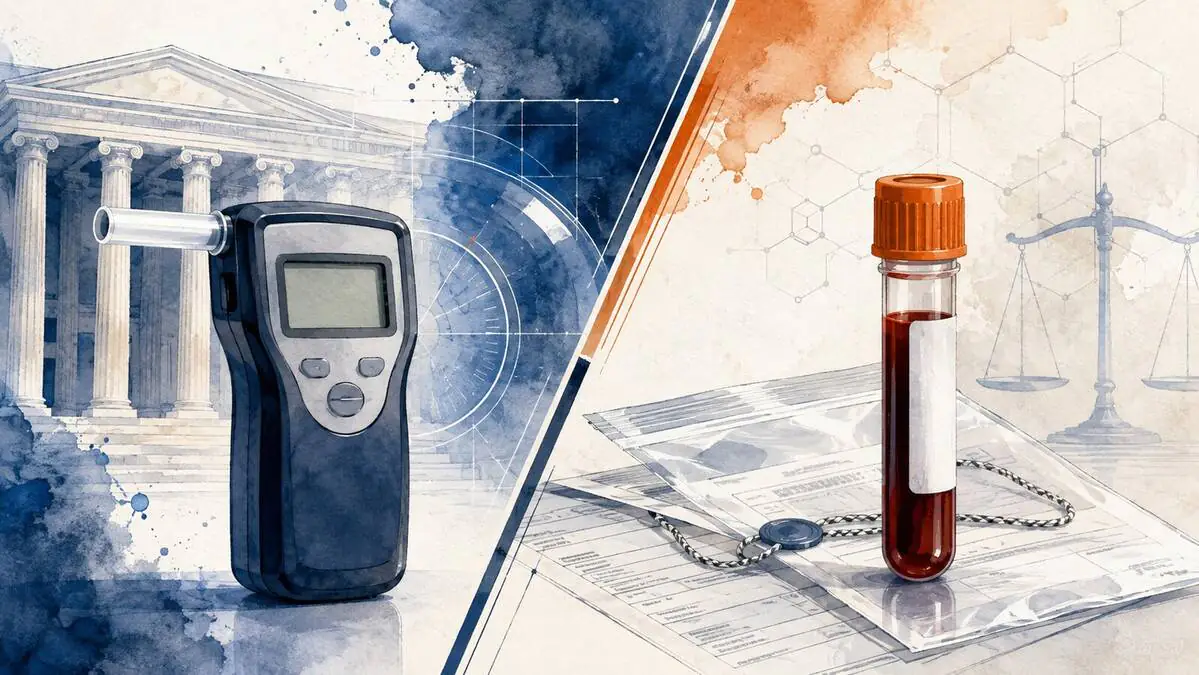
Blood-test search warrants in North Carolina DWI cases
How warrants, implied-consent procedures, laboratory reports and testimony fit together after a DWI arrest.
When officers seek a blood sample
A blood sample may be requested under implied-consent procedures, obtained with consent, or compelled under a judicial search warrant when legal requirements are met. Serious crashes, suspected drug impairment, medical treatment and a breath-test refusal are common contexts, but each case turns on its own facts.
A warrant application must establish probable cause and particularly describe the evidence sought. Counsel may examine the affidavit, timing, magistrate authorization, execution of the warrant, chain of custody, collection protocol and laboratory documentation.
Refusal does not necessarily end testing
North Carolina law permits an officer to seek a search warrant or use another constitutionally valid process after a refusal. A refusal may also have separate DMV and evidentiary consequences. It is therefore inaccurate to assume that declining a requested test prevents the State from obtaining chemical evidence.
Blood evidence is technical—but not automatically conclusive
A numerical result must be connected to a reliable sample, validated analysis and legally admissible evidence. The timing between driving and collection, medical records, possible contamination, substance identification and the State’s theory of impairment can all be relevant.
Frequently asked questions
Can police obtain blood after a breath-test refusal?
Potentially, yes. Officers may seek a search warrant or rely on another constitutionally valid basis.
Does a hospital blood result automatically become court evidence?
No. Source, purpose, records foundation, testing method and admissibility rules still matter.
Must every analyst testify in person?
Not necessarily. North Carolina law provides specified report and remote-testimony procedures, with notice and objection protections that require case-specific review.