

DWI Field Sobriety Testing for the Mobility Impaired
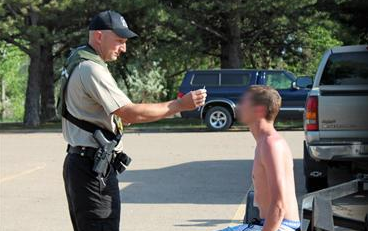
The NHTSA SFST battery is the standard for driving while impaired field sobriety testing. The SFST batteryconsists of three tests: (1) the horizontal gaze nystagmus (HGN) test, (2) the walk and turn (WAT) test, and (3) the one leg stand (OLS) test. The WAT and OLS require you to be able to walk, stand, and balance as a normal person would. If you are mobility impaired, you may not be able to complete the WAT and OLS portions of the NHTSA SFST battery.
Historically, DWI police officers have relied exclusively on their observations and the HGN when making a DWI arrest of a mobility impaired person. Recently, however, police officers have been using NASBLA training to conduct a seated field sobriety test for mobility impaired subjects. The NASBLA field sobriety battery is patently different than the NHTSA SFST battery.
The NASBLA field sobriety battery includes the following tests: (1) HGN, (2) finger to nose test, (3) palm pat test, and (4) hand coordination test. The battery is designed to detect boating while impaired (BWI) / boating under the influence (BUI) suspects and all tests are conducted from a seated position. Since the tests are conducted from a seated position, the NASBLA tests are supposedly applicable to detect DWI / DUI suspects.
The problem with applying NASBLA tests to DWIs is that there is no study to prove their validity. In 2008, a study was conducted by NASBLA and the U.S. Coast Guard entitled “Validation of Standardized Field Sobriety Tests For Use in the Marine Environment.” The purpose of the study was to validate SFSTs for BWI / BUI enforcement in the marine environment. Due to balance, stability, and equilibrium issues that boaters may face, law enforcement realized that roadside SFSTs were not adequate to test for BWI. The NASBLA study shows that the NASBLA waterborne SFSTs are more accurate in testing for BWIs than traditional NHTSA roadside SFSTs.
Since the study only focused on BWI enforcement, it was only validated for the marine environment. When a police officer attempts to use a NASBLA test to detect a roadside DWI suspect, that officer is using an unproven testing system. To reiterate, NASBLA tests have only been validated for use in the marine environment and are not proven to be effective to detect DWI suspects. Thus, NASBLA field sobriety tests should hold very little weight when used to prove that a mobility impaired suspect as DWI.
If you were charged with DWI and would like to speak to a HuntersvilleDWI attorney, please contact Adkins Law. Adkins Law is located in Huntersville NC and primarily serves Mecklenburg County and the Lake Norman area.
Share This Story, Choose Your Platform!
Disclaimer: This website provides general information and discussion about legal topics. The content is not legal advice and should not be relied upon as such. Always seek the advice of a licensed attorney for legal matters.