

Charlotte: From Trading Paths to the Queen City Skyline – A 300-Year History Updated 2025
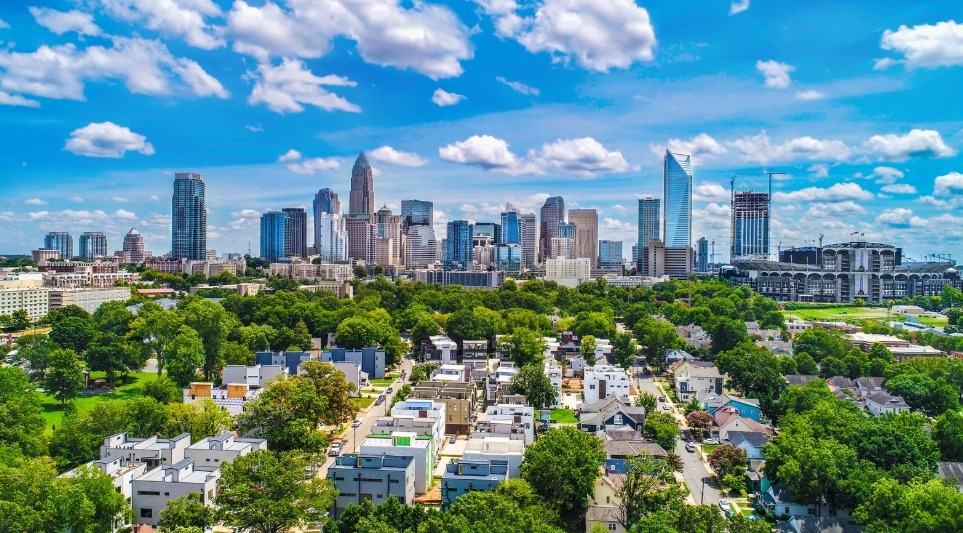
Charlotte, North Carolina—known today as the Queen City—emerged from humble beginnings at the intersection of two trading paths. Over nearly three centuries, it has transformed into one of the fastest-growing metropolitan areas in the United States. This long-form history explores the forces that shaped Charlotte’s trajectory: from Native American roots to revolutionary defiance, from the first gold rush in the United States to its rise as a banking capital of the South. Along the way, Charlotte has been a battlefield, a cotton town, a rail hub, a civil rights stage, and a city of constant reinvention. The following essay traces Charlotte’s journey in detail, offering a narrative of resilience, ambition, conflict, and community.
Before Charlotte: On Catawba Land
Long before Europeans arrived, the land that became Charlotte was home to the Catawba people and other Siouan-speaking groups. The Catawba River provided fertile ground, fish, and transportation, while villages dotted the piedmont landscape. These communities developed intricate social systems, ceremonial traditions, and trade networks that stretched deep into the Carolinas and Virginia. When European colonists began pushing westward from the Atlantic coast in the 17th and 18th centuries, the Catawba maintained a fragile alliance—trading deerskins and goods—while simultaneously suffering from waves of smallpox and other diseases. Despite devastating losses, the Catawba Nation survived and continues to thrive today, reminding Charlotte that its deepest roots are Indigenous.
Two Paths Cross: Trade & Tryon
Charlotte’s founding in 1768 was no accident. Settlers from Pennsylvania and Virginia followed the Great Wagon Road southward, while an ancient east–west trading path used by Native Americans crossed the same ridge. Where these routes met, a small village sprang up. Its leaders sought legitimacy and favor from the Crown, naming it Charlotte Town in honor of Queen Charlotte, the German-born wife of King George III. The crossroads became the heart of town—now Trade and Tryon Streets in Uptown. This geographic destiny as a crossroads has remained the city’s defining feature ever since.
Revolution and the Hornet’s Nest
As tensions with Britain escalated, Mecklenburg County became a hotbed of revolutionary sentiment. On May 31, 1775, local leaders adopted the Mecklenburg Resolves, a radical document declaring that British authority was null and void in the county. Whether or not the legendary ‘Mecklenburg Declaration of Independence’ of May 20 preceded the national declaration, Charlotte’s patriots earned a reputation for zeal. When British General Cornwallis occupied the town briefly in 1780, he encountered fierce resistance and dubbed Charlotte ‘a hornet’s nest of rebellion.’ The nickname stuck, later immortalized in the logo of the city’s NBA team.
The First Gold Rush
In 1799, 12-year-old Conrad Reed found a shiny rock in Cabarrus County that turned out to be a 17-pound gold nugget. This discovery sparked the first gold rush in the United States, decades before California. Prospectors poured into the Carolina Piedmont, and Charlotte became the financial and logistical hub of gold mining operations. In 1837, the U.S. government opened a branch mint in Charlotte to coin gold locally. The Charlotte Mint produced gold coins until the Civil War, leaving behind a legacy now preserved in the Mint Museum of Art. Though the rush faded by the mid-1800s, it positioned Charlotte as a city tied to finance and resource extraction.
Rails, Cotton, and the New South
The 19th century brought the rise of cotton and railroads. By the 1850s, rail lines connected Charlotte to coastal ports and other markets. Cotton arrived from surrounding counties to be traded, processed, and eventually woven into textiles. After the Civil War, Charlotte became a key booster of the ‘New South’ philosophy, championed by industrialist D. A. Tompkins. Textile mills sprang up, turning the region into a manufacturing hub. Immigrant workers, poor whites, and African Americans sought jobs, though segregation and Jim Crow laws limited opportunities for Black Carolinians. The era cemented Charlotte as an industrial center while deepening inequities that would spark future struggles.
The Civil War and Its Aftermath
Though North Carolina was not the first to secede, Charlotte played a role in the Confederacy. The city hosted a Confederate Navy Yard, producing iron goods and munitions. In April 1865, after Richmond fell, Jefferson Davis and his cabinet met in Charlotte for their last full meeting. The war left the region economically battered, but Charlotte leveraged its rail connections to recover faster than many Southern towns. By the late 19th century, railroads once again funneled goods and people through the city, sustaining growth.
Camp Greene and World War I
In 1917, Charlotte was chosen as the site of Camp Greene, a sprawling U.S. Army training base. Tens of thousands of soldiers trained there, bringing money and infrastructure improvements to the city. Many soldiers and their families settled in Charlotte after the war, adding to its population boom. This military connection set the stage for Charlotte’s future role as a logistics and transportation hub.
The Rise of Higher Education
Educational institutions solidified Charlotte’s identity. Johnson C. Smith University, founded in 1867, provided generations of African American leaders. Queens University evolved from a women’s college into a liberal arts institution. After World War II, the University of North Carolina at Charlotte was founded to serve returning veterans, eventually growing into a major research university. Education anchored Charlotte’s intellectual and civic life.
Civil Rights and School Desegregation
Charlotte’s role in the civil rights movement was complex. In 1957, 15-year-old Dorothy Counts braved jeers as she integrated Harding High School. The photograph of her walking with dignity amid hostility became iconic. In 1971, the Supreme Court’s decision in Swann v. Charlotte-Mecklenburg Board of Education upheld busing as a tool for desegregation, making Charlotte a national example. Though controversial, these battles reshaped education and race relations in the city.
Urban Renewal and Brooklyn
In the 1960s, Charlotte leaders launched urban renewal projects that demolished the Brooklyn neighborhood in Second Ward. Brooklyn was a vibrant Black community with businesses, schools, and churches. Its destruction displaced thousands, erasing cultural heritage and fracturing lives. Today, efforts are underway to memorialize and restore some of what was lost, but the scars of Brooklyn’s erasure remain visible.
Annexation, Growth, and the Banking Boom
Charlotte expanded aggressively through annexation, absorbing surrounding neighborhoods and farmland. Its population swelled, and so did its infrastructure. The city’s airport, opened in the 1930s, grew into Charlotte Douglas International Airport, now one of the busiest hubs in the country. In the 1980s and 1990s, banking deregulation fueled Charlotte’s rise as a financial capital. Hugh McColl’s NationsBank acquired BankAmerica in 1998, creating Bank of America with headquarters in Charlotte. Wachovia also expanded before its collapse in the 2008 financial crisis, after which Wells Fargo made Charlotte its East Coast base. Today, Truist joins them in anchoring Charlotte’s banking identity.
Culture, Sports, and National Spotlight
Charlotte’s cultural and sports scenes matured alongside economic growth. The Charlotte Hornets debuted in 1988, igniting NBA passion. The Carolina Panthers began play in 1995, making football central to civic pride. The NASCAR Hall of Fame opened in 2010, honoring the region’s motorsports legacy. Charlotte hosted the Democratic National Convention in 2012 and a scaled-down Republican National Convention in 2020. Protests over policing, particularly after the 2016 shooting of Keith Lamont Scott, showed Charlotte wrestling with issues of justice and equity on a national stage.
Light Rail and the Modern Era
The opening of the LYNX Blue Line light rail in 2007 marked a new phase of urban development. South End transformed from a belt of factories into a walkable district of breweries, apartments, and offices. The Blue Line’s expansion to UNC Charlotte connected Uptown to higher education, spurring growth along its corridor. Coupled with the airport’s global reach, Charlotte positioned itself as a city of the future—interconnected, dynamic, and ambitious.
Looking Ahead
Charlotte faces the 21st century with both momentum and challenges. Affordable housing, equitable development, and racial justice remain pressing concerns. Yet Charlotte’s history reveals a city adept at reinvention. From Catawba paths to gold coins, from mills to skyscrapers, Charlotte thrives at the crossroads. Its crown still gleams, a symbol of both heritage and aspiration.
About Adkins Law
At Adkins Law, PLLC (Huntersville, NC), we believe in honoring our community’s history while helping shape its future. From family law to estate planning, our mission is to guide Charlotte-area families with clarity, compassion, and trusted counsel. Just as Charlotte has reinvented itself for 300 years, we stand ready to help you navigate life’s turning points with strength and resilience. Contact us today.
Share This Story, Choose Your Platform!
Disclaimer: This website provides general information and discussion about legal topics. The content is not legal advice and should not be relied upon as such. Always seek the advice of a licensed attorney for legal matters.