

Jet Ski Age Requirements in North Carolina: 2026 Guide
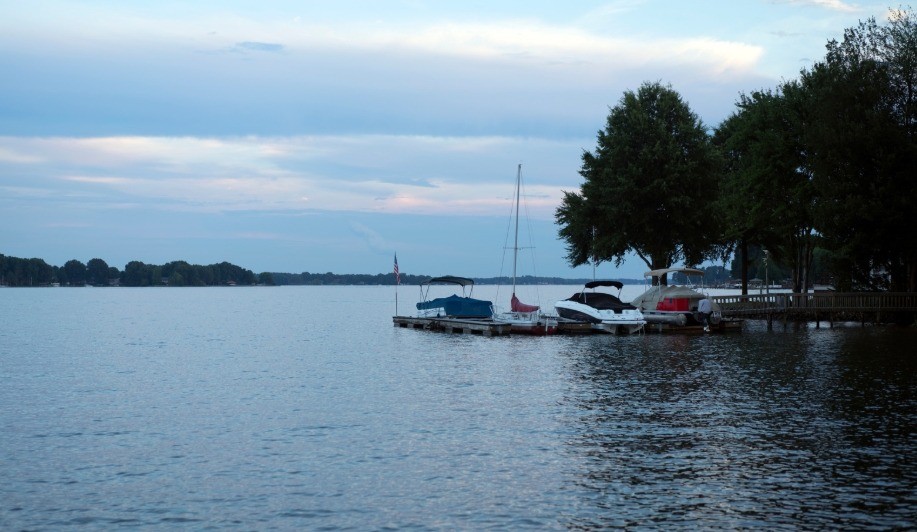
Lake Norman Boating Guide
Jet-ski age requirements in North Carolina
North Carolina calls a jet ski a personal watercraft, or PWC. Age, boating-education, life-jacket, distance, and operating-hour rules all apply—and Lake Norman has an additional no-wake rule near common shoreline facilities.
Originally published September 9, 2014. Substantially updated September 6, 2026. The old “under 26” education wording is obsolete. Current law generally uses a January 1, 1988 birth-date threshold, together with special PWC rules for operators ages 14 and 15.
Short answer
Under 14: may not operate a PWC. Age 14 or 15: may operate only if an eligible adult at least 18 physically occupies the PWC and complies with boating-education law, or if the young operator carries proof of age and qualifying boating-safety certification. Age 16 and older: the special under-16 restriction no longer applies, but boating-education requirements, safety equipment, and all operating rules still do.
North Carolina PWC age chart
No operation of a personal watercraft on North Carolina waters. An owner or responsible adult must not knowingly allow it.
Operation is allowed only with a compliant adult age 18+ physically on the PWC, or with identification plus qualifying boating-safety proof carried by the operator.
The PWC-specific under-16 rule ends, but anyone born on or after January 1, 1988 generally must meet the boating-education requirement or a statutory exception.
Boating education: the current rule
Under G.S. 75A-16.2, a person operating a vessel with a motor of 10 horsepower or more on public waters must comply with boating-safety education requirements. One method is a Commission-approved or NASBLA-approved course. The statute also recognizes specific alternatives and exceptions, including certain Coast Guard licenses, qualifying rental documentation, onboard supervision, short-term nonresident use, and proof that the operator was born before January 1, 1988.
A PWC operator remains subject to the more specific provisions of G.S. 75A-13.3. Carry proof when the law requires it; an officer may request identification and education documentation.
Six rules every Lake Norman rider should know
Daylight only
A PWC may not be operated between sunset and sunrise.
Wear the right PFD
Every rider and person being towed must wear a U.S. Coast Guard-approved personal flotation device; inflatable PFDs do not satisfy the PWC rule.
Attach the cut-off lanyard
If the manufacturer equipped the PWC with a lanyard-type engine cut-off switch, it must be attached to the operator, clothing, or PFD while operating.
Observe distance limits
At more than no-wake speed, stay at least 100 feet from docks, swimmers, anchored vessels, manually propelled vessels, and other protected areas; narrow-channel rules use 50 feet.
Respect Lake Norman’s no-wake zone
G.S. 75A-14.1 bars operation above no-wake speed within 50 yards of vessel-launching areas, bridges, docks, piers, marinas, storage structures, or service areas on Lake Norman.
Operate sober and prudently
Reckless operation and boating while impaired are separate legal and safety risks. Wake jumping, weaving, and following too closely can violate the PWC statute.
Before handing over the key
- Confirm the operator’s age, education documentation, and any supervising adult’s compliance;
- Check registration, title, PFDs, lanyard, fuel, weather, and manufacturer capacity;
- Review local signs and no-wake zones at the launch or marina;
- Set a firm return time before sunset and a sober-operation rule;
- Remember that an owner or person controlling the PWC can face consequences for knowingly allowing an underage operator to violate the statute.
Related Lake Norman resources
Questions about a North Carolina boating charge?
Adkins Law serves Huntersville and the Lake Norman region. A consultation can address the citation, operator’s age, education documents, waterway, and alleged conduct.
Official sources
- N.C. Wildlife Resources Commission — Personal Watercraft
- G.S. 75A-13.3 — Personal Watercraft
- G.S. 75A-16.2 — Boating Safety Education
This article provides general North Carolina legal information, not legal advice. Laws and local regulations change. Verify current rules for the waterway and facts involved.
Share This Story, Choose Your Platform!
Disclaimer: This website provides general information and discussion about legal topics. The content is not legal advice and should not be relied upon as such. Always seek the advice of a licensed attorney for legal matters.