

DWI Field Sobriety Testing in North Carolina: 2026 Guide
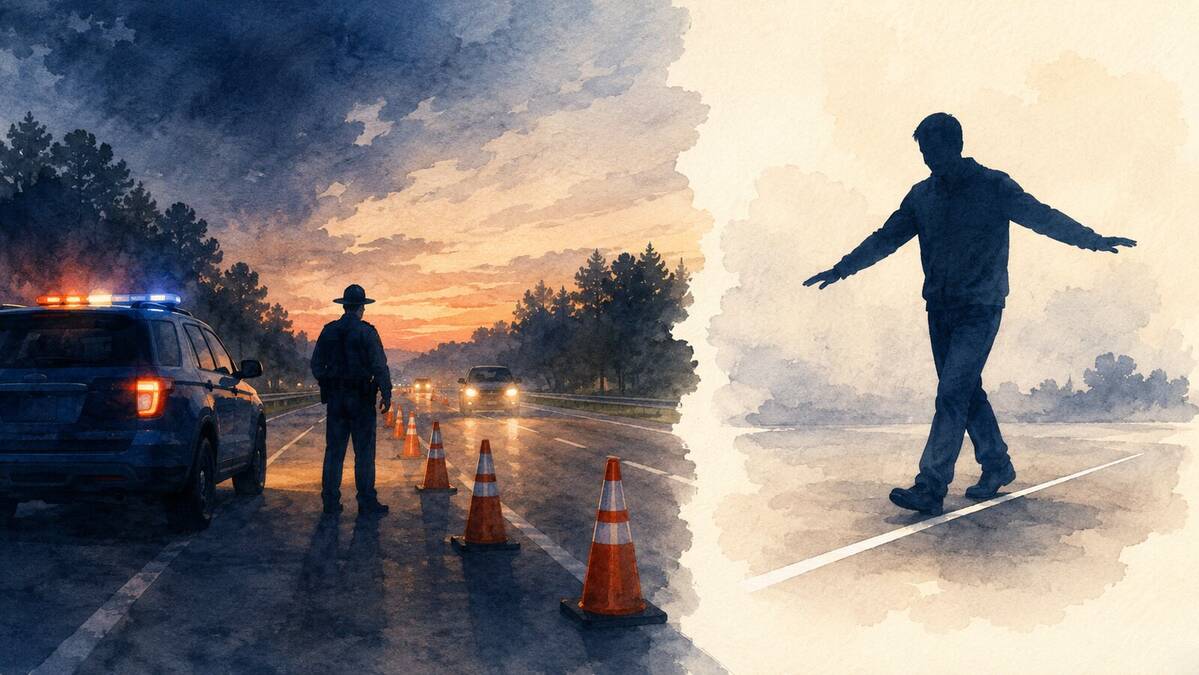
Field sobriety testing in a North Carolina DWI case.
Roadside tests are observations—not a chemical measurement and not an automatic finding of guilt. Their value depends on the instructions, conditions, administration, documentation, and the full context of the stop.
Originally published August 10, 2014 · Substantially updated September 6, 2026
What “standardized” means
The National Highway Traffic Safety Administration’s standardized field sobriety test battery consists of three exercises: horizontal gaze nystagmus, walk-and-turn, and one-leg stand. “Standardized” matters because officers are trained to give defined instructions, demonstrate tasks, position the subject, and record specified observations.
The tests may contribute to an officer’s probable-cause decision. They do not directly measure alcohol concentration, and they must be considered with driving behavior, statements, appearance, odor, timing, video, medical explanations, chemical analysis, and other evidence.
The three-test battery
The officer observes eye movement while moving a stimulus. Review can include stimulus placement, timing, head movement, visibility, medical questions, and whether the officer documented the trained clues.
This divided-attention exercise uses a designated line, heel-to-toe steps, a turn, and a return sequence. Surface, footwear, space, lighting, comprehension, and demonstrated instructions can matter.
The subject is asked to raise one foot, keep arms at the sides, look at the raised foot, and count as instructed. Balance limitations, injury, age, surface, traffic, weather, and timing may affect performance.
NHTSA’s 2023 SFST Instructor Guide is an official training reference. A case review asks not just whether a test occurred, but how closely the administration and scoring followed the trained protocol.
Conditions that deserve close review
Injury, surgery, neurological or vestibular conditions, vision issues, fatigue, anxiety, medication, footwear, age, and language or comprehension.
Uneven or sloped pavement, roadside traffic, flashing lights, weather, darkness, limited space, noise, and the location of the camera.
Exact instructions, demonstrations, interruptions, stimulus timing and position, counting, test sequence, and whether deviations were explained.
Body-camera and dash-camera video, notes, report language, timestamps, dispatch records, witness accounts, and consistency across evidence.
How the evidence fits the North Carolina charge
North Carolina’s impaired-driving offense is defined in G.S. § 20-138.1. Depending on the case, the State may rely on appreciable impairment, a qualifying alcohol concentration, or a Schedule I controlled substance theory. Field observations may be one piece of that proof, but the relevance of each observation depends on the theory and the admissible evidence.
A careful defense review generally compares the report with the recordings, identifies what occurred before each test, evaluates whether conditions matched the officer’s training, and considers lawful grounds for the stop and continued detention. The goal is not to grade a person’s roadside performance in isolation; it is to test the reliability, legality, and weight of the evidence as a whole.
Attorney Christopher Adkins and the Adkins Law team represent clients in Huntersville, Mecklenburg County, and the Lake Norman region in DWI and traffic matters.
Continue through the DWI resource center
Request a DWI consultation
Preserve citations, reports, videos, and paperwork, then contact the Huntersville office.
This article provides general North Carolina legal information, not legal advice for a particular case. DWI law, science, procedure, and facts can change the analysis.
Share This Story, Choose Your Platform!
Disclaimer: This website provides general information and discussion about legal topics. The content is not legal advice and should not be relied upon as such. Always seek the advice of a licensed attorney for legal matters.