

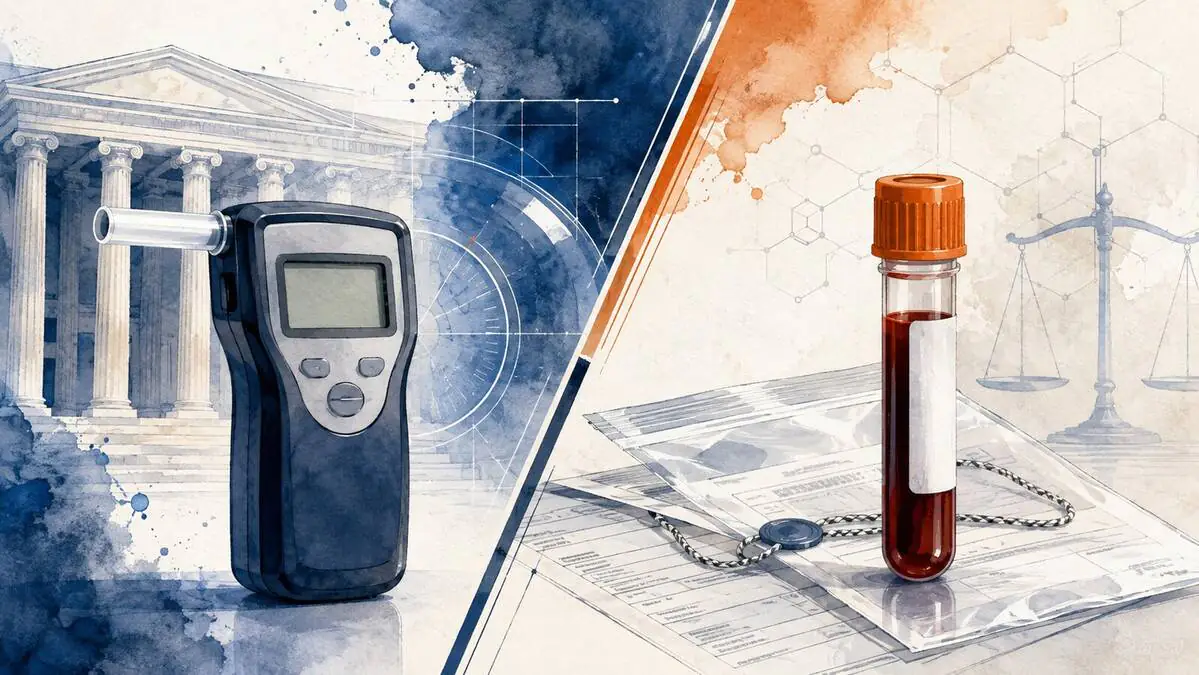
Refusing a DWI chemical test in North Carolina
The immediate license consequences, one-year DMV revocation, hearing process and possible compelled testing after a refusal.
Two separate license consequences can begin
After an implied-consent charge, a qualifying alcohol concentration or willful refusal can trigger an immediate civil license revocation—generally at least 30 days under G.S. 20-16.5. Separately, the Division of Motor Vehicles may impose a one-year revocation for a first willful refusal under G.S. 20-16.2. Later refusals can carry longer consequences.
The paperwork, notice date and deadlines matter. A person may request a DMV hearing to contest designated issues, including reasonable grounds, whether required rights were given, and whether the refusal was willful.
Rights before a chemical test
Before the requested analysis, the person must be advised of statutory rights. North Carolina law provides a right to call an attorney and select a witness to view testing procedures, but the testing process may not be delayed more than 30 minutes from notice of those rights.
Limited driving after a refusal
G.S. 20-16.2(e1) allows a limited driving privilege after six months of an eligible refusal revocation if statutory conditions are met. Eligibility is not automatic, and a separate DWI conviction or other revocation can affect practical relief.
Preserve the record
Save the revocation report, rights form, charging documents and any release paperwork. Video, witness availability, testing-room timestamps and whether the person physically completed or obstructed testing can be important to whether the State proves a willful refusal.
Frequently asked questions
Is refusing a breath test a criminal offense by itself?
The refusal ordinarily produces civil licensing and evidentiary consequences rather than a separate DWI conviction, but related conduct may create other charges.
Can a refusal be used in court?
Yes. North Carolina law expressly makes refusal evidence admissible.
Can I drive during the one-year refusal revocation?
An eligible person may petition for a limited privilege after six months, subject to statutory conditions and any other active revocations.