

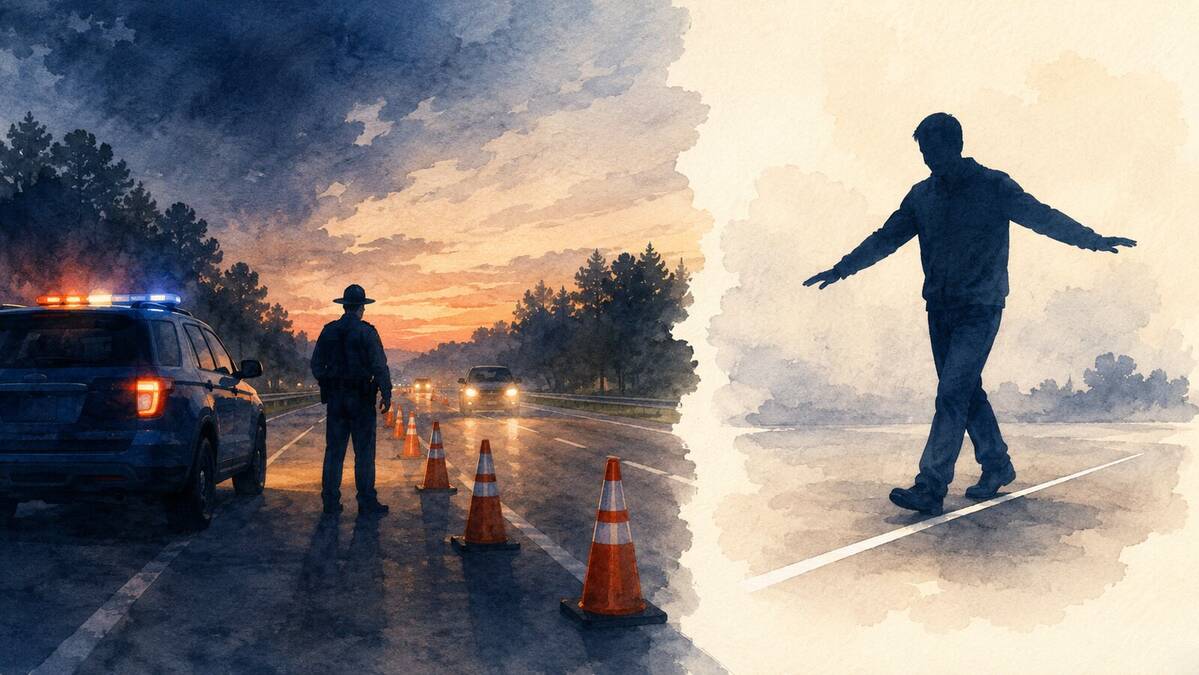
DWI checking stations and roadblocks in North Carolina
Written plans, neutral stopping patterns, supervisory limits and constitutional reasonableness all matter at a checkpoint.
A checkpoint is different from an ordinary traffic stop
An officer ordinarily needs reasonable suspicion to stop an individual vehicle. A properly operated checking station can stop vehicles according to a neutral plan without individualized suspicion, but the program and operation remain subject to statutory and constitutional limits.
G.S. 20-16.3A requires a written policy, a predetermined pattern for stopping vehicles, advance designation of supervisory responsibility, and operation designed to avoid unbridled discretion. The checkpoint’s primary programmatic purpose and overall reasonableness also matter under constitutional law.
What happens after the initial stop?
The initial checkpoint encounter should be appropriately limited. Additional detention generally requires facts developed during the encounter—such as odor, open containers, speech, admissions or other observations—sufficient to justify extending the investigation.
Evidence to preserve
Checkpoint plans, supervisor logs, agency policies, site diagrams, photographs, body-camera video, dash-camera video, times, traffic pattern and the sequence of officer observations can all be important. A deviation is not automatically case-dispositive, but it should be identified and analyzed.
Frequently asked questions
Can I turn away before a checkpoint?
A lawful turn is not automatically illegal, but driving conduct and the surrounding circumstances may create separate reasonable suspicion.
Must every car be stopped?
No. The written plan may use a neutral predetermined pattern, such as every vehicle or every third vehicle.
Can an officer extend the stop?
Only when the officer develops a lawful basis to extend the detention beyond the checkpoint’s initial purpose.